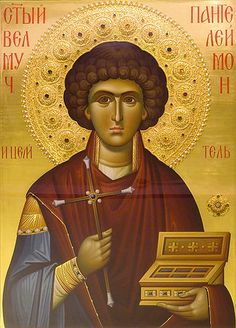
Today could be called Catholic Pants Day, not because there is such a thing as Catholic pants (is there?) but because the English language is indebted to a Catholic saint for the word “pants,” and his feast happens to be today.
Saint Pantaleon of Nicomedia (d. 303) was a nobleman and the Roman Emperor’s physician when he apostatized. Fortunately, he was brought back to the Faith by a holy priest who convinced him that Jesus Christ was the greatest of all physicians. When a persecution began, no amount of torture could induce Pantaleon to abandon his Savior again, and thus the former apostate died a holy martyr. In the Greek East, Pantaleon is honored as one of the “Great Martyrs”; in the Latin West, he is one of the Fourteen Holy Helpers, invoked for consumptive diseases.
But what does this have to do with pants? Nothing, really. But centuries later Pantaleon’s cult was popular in Venice, partly because his name resembles the Venetian battle cry Piante Lione (“Plant the Lion”). Over time, the term Pantalone came to designate a Venetian character in Italian comedy; and since the character generally appeared wearing distinctive Venetian breeches, the breeches came to be known as pantaloons, or”pants” for short.
Saint Pantaleon’s Day thus presents us with a double irony. First, our most common word for trousers comes from a saint who probably never wore or saw a pair in his life. Second, given the temperature on July 27, we celebrate the eponymous patron of pants on one of the days we are least inclined to wear them.
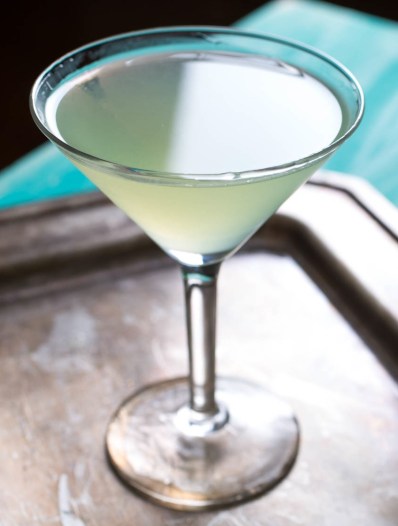
In honor of the odd migration of the saint’s name, how about this Prohibition-era libation: 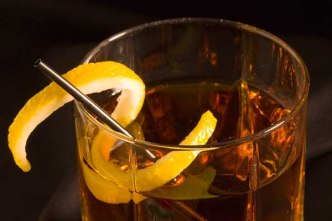
Ants in the Pants Cocktail
1 oz. gin
½ oz. Grand Marnier
½ oz. sweet vermouth
1 dash lemon juice
Pour all ingredients in a shaker with ice and shake forty times. Strain into a cocktail glass.
So tonight, say a prayer that all those who have fallen away from the Faith may come back like St. Pantaleon. Then, fill your glass to the brim and shout, Piante Lione! (Pants are optional.)
 Gibson (a martini with pearl onions) because of a colorful Italian legend about St. Peter pulling his unpleasant mother from the fires of hell by the strands of an onion. Make your Gibson the way you would a gin or vodka martini and simply add a pearl onion or two, which you can usually find next to the olives at the supermarket. For added festivity, we took two toothpicks and make the Keys of St. Peter out of them: a silver one, made from duct tape, and a gold one, made from yellow electrical tape. I shaved off a little bit of wood at the center of each toothpick, glued them together, and voila! (or rather, Ecce!).
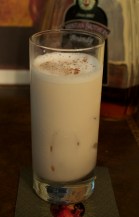 brandy or “burnt wine” is related to the wine that he recommends for the stomach ailment plaguing St. Timothy. Since we do not include the Brandy Milk Punch in Drinking With The Saints, here is a good recipe from bonappetit.com:
 southern Italy, but he hailed from Bordeaux, France, a region distinguished even in Roman times for its wines; and as a Roman nobleman, Paulinus most likely managed his own vineyards and wine presses on his estates in Aquitaine prior to his ordination. A red Bordeaux will also pair really nicely with whatever red meat you might be having.
 1 oz. Frangelico


 For better or for worse, the upcoming feast of Pentecost is an irresistible occasion for bad puns on the Spirit and the spirits. At least the temptation to confuse the two is nothing new. When the disciples began to preach in different tongues on the first Pentecost, some members of the audience mockingly declared: “These men are full of new wine” (Acts 2:13). St. Peter’s response is telling. Does he declare his innocence by condemning wine and strong drink? Does he express disgust at the thought of alcohol touching his pious lips? Hardly. We are “not drunk, as you suppose,” he replied, “seeing it is but the third hour of the day” (Acts 2:15). Translation: “Of course we’re not drunk: it’s only nine o’clock in the morning. But after we baptize 3,000 souls later today (Acts 2:41), it’s Miller Time.”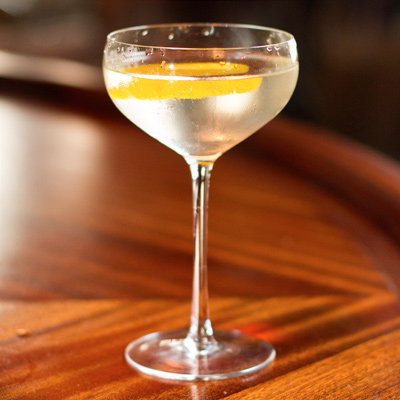


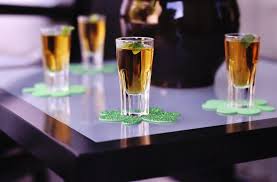 “drowning the shamrock” because a clover leaf is sometimes floated on the drink, the custom simply involves drinking a full measure of whiskey in memory of a legend about St. Patrick and a stingy innkeeper who gave him a glass of whiskey that was far from full. Patrick told the man that a devil was living in his cellar which was causing him to be stingy and dishonest and that the only way the man could banish the devil was by filling each glass to its brim. When Patrick returned to the inn later, he saw that each cup was full and proclaimed the devil duly exorcised. Even if whiskey is not your cup of tea, the legend is a good lesson in generosity.
 Drinking With The Saints