A Drink for Catholic Pants Day

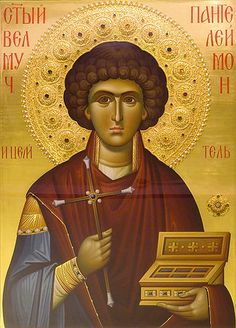
Saint Pantaleon

Today could be called Catholic Pants Day, not because there is such a thing as Catholic pants (is there?) but because the English language is indebted to a Catholic saint for the word “pants,” and his feast happens to be today.

Saint Pantaleon of Nicomedia (d. 303) was a nobleman and the Roman Emperor’s physician when he apostatized. Fortunately, he was brought back to the Faith by a holy priest who convinced him that Jesus Christ was the greatest of all physicians. When a persecution began, no amount of torture could induce Pantaleon to abandon his Savior again, and thus the former apostate died a holy martyr. In the Greek East, Pantaleon is honored as one of the “Great Martyrs”; in the Latin West, he is one of the Fourteen Holy Helpers, invoked for consumptive diseases.

But what does this have to do with pants? Nothing, really. But centuries later Pantaleon’s cult was popular in Venice, partly because his name resembles the Venetian battle cry Piante Lione (“Plant the Lion”). Over time, the term Pantalone came to designate a Venetian character in Italian comedy; and since the character generally appeared wearing distinctive Venetian breeches, the breeches came to be known as pantaloons, or”pants” for short.

Saint Pantaleon’s Day thus presents us with a double irony. First, our most common word for trousers comes from a saint who probably never wore or saw a pair in his life. Second, given the temperature on July 27, we celebrate the eponymous patron of pants on one of the days we are least inclined to wear them.

In honor of the odd migration of the saint’s name, how about this Prohibition-era libation: Ants in the Pants
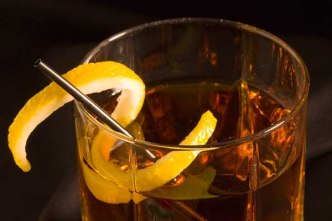
Ants in the Pants Cocktail
1 oz. gin
½ oz. Grand Marnier
½ oz. sweet vermouth
1 dash lemon juice
Pour all ingredients in a shaker with ice and shake forty times. Strain into a cocktail glass.

So tonight, say a prayer that all those who have fallen away from the Faith may come back like St. Pantaleon. Then, fill your glass to the brim and shout, Piante Lione! (Pants are optional.)


Great Drinks for Saints Peter and Paul

June 29 is the feast of Saints Peter and Paul. These two Apostles founded the Church in Rome, turning the capitol of Roman imperialism into the headquarters of Christianity. To this day, Rome’s citizens celebrate the Feast of Peter and Paul as a replacement of the city’s mythical and fratricidal founders, Romulus and Remus.

The Gibson
Let’s begin the celebration with St. Peter. In Drinking With The Saints we recommend a Gibson St. PeterGibson (a martini with pearl onions) because of a colorful Italian legend about St. Peter pulling his unpleasant mother from the fires of hell by the strands of an onion. Make your Gibson the way you would a gin or vodka martini and simply add a pearl onion or two, which you can usually find next to the olives at the supermarket. For added festivity, we took two toothpicks and make the Keys of St. Peter out of them: a silver one, made from duct tape, and a gold one, made from yellow electrical tape. I shaved off a little bit of wood at the center of each toothpick, glued them together, and voila! (or rather, Ecce!).
Gibson Pearl Onion Keys

Still confused? Watch me make a Gibson on YouTube.

Brandy Milk Punch
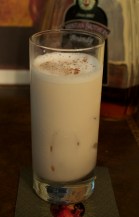
For St. Paul, try a Brandy Milk Punch. Paul uses milk as a metaphor in his writings, and Brandy Milk Punchbrandy or “burnt wine” is related to the wine that he recommends for the stomach ailment plaguing St. Timothy. Since we do not include the Brandy Milk Punch in Drinking With The Saints, here is a good recipe from bonappetit.com:
2 oz. brandy
1 1/2 oz. heavy cream
1 oz. simple syrup
1/2 vanilla extract
nutmeg
Pour all ingredients except nutmeg into a shaker filled with ice and shake forty times. Strain into a highball filled with ice and top with a pinch of nutmeg.

And watch me make a Brandy Milk Punch on YouTube.

If you don’t want to try both drinks in one evening, you can wait until June 30 for the Brandy Milk Punch, since practically speaking more attention is paid to St. Peter today whole St. Paul is commemorated tomorrow. And not to tempt you, but the Brandy Milk Punch is technically a “morning cocktail” like a mimosa or Bloody Mary.

Happy feasting!


Drinking With Dad: A Holy Happy Hour for Father’s Day

Father’s Day is coming up, and although it is not on the Church calendar, good luck trying to ignore it. To help you surprise Dad with the ultimate dinner and drinking party, we are combining several ideas from nearby feast days found in our Drinking With The Saints: The Sinner’s Guide to a Holy Happy Hour. If the father or husband in your life enjoys a strong beverage, he’ll be thrilled with this thoughtful and tasty menu instead of another necktie.

The Cocktail Before Dinner
“The Great Basil” is a DWTS original named after St Basil the Great, whose feast day is June 14/January 2. St. Basil was so tough that when an imperial agent threatened to rip out his liver if he didn’t cow tow to the Arian policies of the Emperor, the illness-ridden Basil coolly replied, “Good. My liver’s been giving me trouble for years.” When the astonished prefect, who was accustomed to Arian bootlickers, said that no one had ever talked to him like that before, Basil replied, “Perhaps you’ve never talked to a Christian bishop before.”

The Great Basil is inspired by Basil’s name as well as his diet of herbs and “vapid wine.” This refreshing drink is perfect on a hot summer’s day while keeping watch over a sizzling grill.

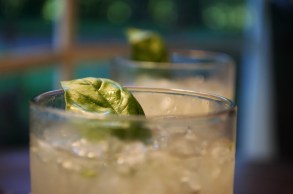
Great Basil CocktailGreat Basil tops
1 lime wedge
1 tsp. simple syrup
3-6 fresh basil leaves
2 oz. Lillet Blanc
1 oz. gin
basil sprig (for garnishing)
Squeeze lime into shaker. Add basil leaves and simple syrup, and muddle gently. Add ice, Lillet, and gin and shake vigorously at least forty times. Pour into an old-fashioned glass or a highball glass filled with crushed ice. Garnish with a sprig of basil.

During Dinner harp_lager
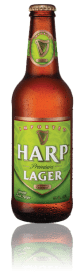
Depending on Dad’s tastes or your main course, you’ll want a beer or wine with dinner. For beer, try a trusty Harp Lager, which we recommend for the Feast of St. Ephrem the Syrian (feast day: June 18/June 9). St. Ephrem was a tremendously energetic deacon whose numerous hymns, poems, sermons, and biblical commentaries earned him the nickname “Harp of the Holy Spirit.”

For wine, think Bordeaux. Saint Paulinus of Nola (feast day: June 22) was a bishop inBordeaux wine cork southern Italy, but he hailed from Bordeaux, France, a region distinguished even in Roman times for its wines; and as a Roman nobleman, Paulinus most likely managed his own vineyards and wine presses on his estates in Aquitaine prior to his ordination. A red Bordeaux will also pair really nicely with whatever red meat you might be having.

Whatever you do, just make sure that you don’t drink and revel late into the night at someone’s grave and pour out libations in their memory: judging from his writings, St. Paulinus really disliked that.

An After-Dinner Drink
This year, Father’s Day falls on the feast of the twin brothers Gervasius and Protasius (June 19). These early martyrs are perhaps most famous for something that happened to them after their death, when the miraculous discovery of their bodies by St. Ambrose led to a stunning defeat of the Roman Empress Justina, an Arian heretic who had been trying to confiscate several of Ambrose’s churches. To celebrate the twins’ posthumous victory over the religiously insane Empress, try our semi-original Royal Nut Job. The “royal” is on account of the Crown Royal rye, the “nut” is for the Frangelico hazelnut liqueur, and the “job” is for the Irish, who usually need one. The drink is so delicious that you might even able to skip dessert.

Royal Nut Job
Royal Nut Job.jpg 1 oz. Frangelico
1 oz. Crown Royal
1 oz. Irish cream
Stir all ingredients in a shaker with ice and strain into an old-fashioned glass filled with ice.


Pope Francis: A Wedding Without Wine is Shameful

Pope-Francis-is-handed-a-bottle-of-wine-by-a-member-of-the-congre

Pope Francis made international news on Wednesday for his robust endorsement of wine. During his weekly Angelus address, the Holy Father interpreted the passage in St. John’s Gospel on the Wedding Feast of Cana. The full text of the Pope’s remarks has not yet been released in English, but here are some of the highlights according to the media:

  • “How is it possible to celebrate the wedding and have a party if you lack what the prophets indicated was a typical element of the messianic banquet?”
  • “Water is necessary to live, but wine expresses the abundance of the banquet and the joy of the feast.”
  • “A wedding feast lacking wine embarrasses the newlyweds – Imagine finishing the wedding feast drinking tea! It would be shameful!”

As Religion News Service wryly noted, while some have begun to wonder whether the Pope is Catholic, he has at least made one thing clear: he’s not a Baptist. And if he had said “iced tea” instead of “tea” in that last remark, his burn of old-school Southern Baptists would have been complete.


It’s National Christian Cheer Day! (or it should be)

Philip-Neri

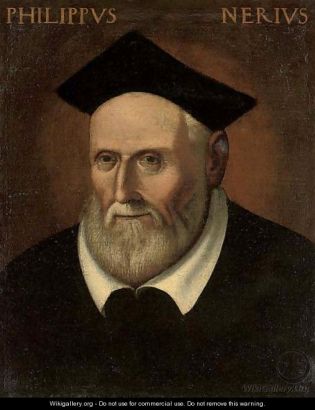
Today, May 26, is the feast of the adorable St. Philip Neri (1515-1595). Even as a boy Philip was so kind and lovable that he was nicknamed Pippo buono or “good little Phil.” As an adult, Philip would wander through the rough parts of Rome and ask, “Well, my brothers! When shall we begin to do good?” His disarming charm led to the conversion of the toughest thugs.

Philip had what the Italians call festività, an infectious joy and humor. The saint held that being cheerful “is the true way to advance in every virtue.” His long experience in directing souls, he said, had taught him “that in spiritual matters cheerful men were much more easy to guide than the melancholy.” Consequently, Philip preserved “perpetual cheerfulness” in himself and went to great lengths to encourage it in others. His room, where he received strangers as if they were his long-lost children at all hours of the day and night, became known as the “Shelter of Christian Mirth.”

Philip sometimes gave his penitents a playful slap on the cheek, saying “It is not you I am beating, but the devil!” Like a zany Italian uncle, he pulled their hair, caressed their faces, boxed their ears, and held their heads near his heart, all of which caused great joy and consolation. He also went to great lengths to appear foolish in the eyes of the world. Philip shaved off half his beard, wore goofy costumes, skipped along the streets as an old man, and once solemnly stroked the beard of a Swiss Guard. In the words of Blessed John Henry Newman, “If ever there was a saint who set his face against humbug, it was Saint Philip.”

Philip also had a burning love for God, literally. Once when he was praying a mystical ball of fire entered his mouth and lodged in his chest. Philip’s heart grew so aflame with divine fervor that he had to rip open his clothes and cool himself on the stone floor. When he rose, there was a painless swelling as large as a man’s fist next to his heart. An autopsy after the saint’s death would disclose the source of the protrusion. Over his heart, which had expanded with the love of God, two of Philip’s ribs were dislodged and curved in the form of an arch.

Tonight, in honor of this warm-hearted saint, have a Heart Warmer:

Heart Warmer  Heart Warmer 2
1½ oz. Kahlua
1 oz. vodka
1 tsp. vanilla extract
3 oz. milk
Pour all ingredients in an old-fashioned glass filled with ice and stir until very cold.

By a remarkable coincidence today is also Red Nose Day, a fundraising event sponsored by Comic Relief to end poverty in which people buy and wear a clownish red nose and the proceeds go to charity. How I wish could join in this charming tomfoolery (St. Philip would have loved it!) but alas, as several Catholic bishops have pointed out, some of those proceeds end up going to powerful organizations that support abortions worldwide. Sigh. It looks like I’ll have to find another way to make my nose red tonight.

Potations for Pentecost

green chostFor better or for worse, the upcoming feast of Pentecost is an irresistible occasion for bad puns on the Spirit and the spirits. At least the temptation to confuse the two is nothing new. When the disciples began to preach in different tongues on the first Pentecost, some members of the audience mockingly declared: “These men are full of new wine” (Acts 2:13). St. Peter’s response is telling. Does he declare his innocence by condemning wine and strong drink? Does he express disgust at the thought of alcohol touching his pious lips? Hardly. We are “not drunk, as you suppose,” he replied, “seeing it is but the third hour of the day” (Acts 2:15). Translation: “Of course we’re not drunk: it’s only nine o’clock in the morning. But after we baptize 3,000 souls later today (Acts 2:41), it’s Miller Time.”
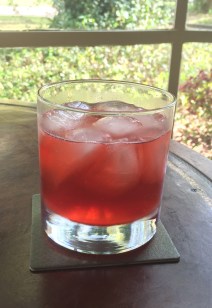
One way to make your Whitsunday a wet Sunday is with a cocktail menu that somehow ties into the attributes of the Holy Spirit. Today we’ll mention three. The festive White Flame can be used to recall the tongues of fire that descended upon the disciples; the dynamic Green Ghost can be thought of as an homage to the Holy Ghost who renews us with hope, symbolized by the color green; and the unusual Windy Corner can commemorate the gusty noise that first announced the Holy Spirit in the Upper Room. None of these drinks were named with the Paraclete in mind, of course, but hey, that’s what the Christian allegorical imagination is for.

White Flame
1½ oz. gin
¾ oz. Cointreau
champagne or dry sparkling wine
Build gin and Cointreau in a highball glass filled with ice. Top with champagne.

Green Ghost
2 oz. gin
½ oz. green chartreuse
½ oz. lime juice
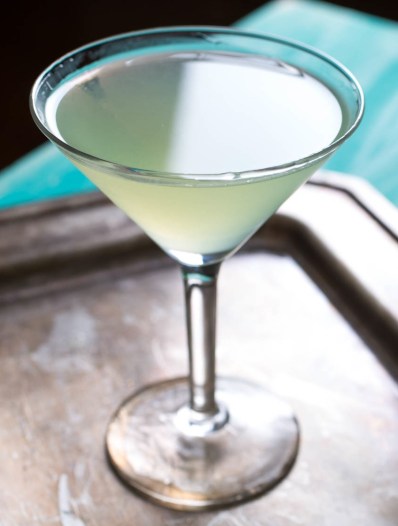
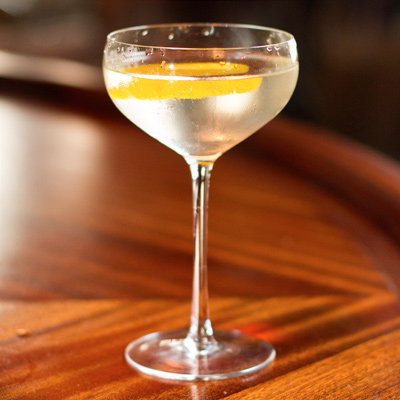
Pour all ingredients in a shaker filled with ice and shake forty times. Strain into a cocktail glass.

Windy Corner
2½ oz. blackberry brandy
nutmeg (to taste)
Stir brandy in a mixing glass with ice and strain into a cocktail glass. Sprinkle with nutmeg. Hint: The nutmeg really does make a difference. And if the drink is too sweet for your tastes, which is likely if the brandy is not top quality, cut it with a splash of soda water.


Tonight, Make it a Vesper

Today is a special day in the Christian calendar. It is the last time in our lives when the traditional Feast of the Ascension, which occurs forty days after Easter, falls on May 5; we will not see another alignment like this again until A.D. 2157. This calls for a drink! In Christian art and folklore, the Ascension is associated with open gates (as in the Gate of Heaven), a lion defeating a dragon (the devil knew he was defeated when he saw Heaven open to mankind for the first time), and flying fowl (which imitate Our Lord’s ascent into a cloud). Stretch your imagination tonight and have any drink named after gates, a lion, a dragon, or a bird. Or perhaps try a drink with an ingredient named after one of these things. Let’s see: Greygoose, Famous Grouse, Wild Turkey…

But since May 5 is also the Feast of Pope St. Pius V, you can simplify matters with a Vesper Martini. Invented by a friend of Ian Fleming and named after a character in one of his James Bond novels, it (unintentionally) recalls a Vespers hymn that the holy pontiff was reciting when he met his eternal reward. Below is the original recipe as it first appeared in Fleming’s work, with some of our editorial additions.

Vesper Martini
1½ oz. (3 measures) Gordon’s gin
½ oz. (1 measure) vodka
¼ oz. (1½ tsp. or half a measure) Kina Lillet (or any white Lillet you can find)
1 large thin slice of lemon peel
Pour all ingredients into a cocktail shaker filled with ice and shake forty times. Strain into a champagne coupe and garnish with lemon.

Vesper-Martini

Whatever the drink, you can still use an Ascension Day toast for the occasion: “God is ascended with jubilee, alleluia! And the Lord with the sound of the trumpet, alleluia!”

The Desert Father

I am pleased to announce a new, almost completely nonalcoholic drink (except for the bitters) created by the esteemed liturgical scholar Dr. Peter Kwasniewski, which he has graciously agreed to share with us. Dr. K came up with the drink as a Lenten substitute for the hard stuff, but this also looks like a great summer beverage. Here it is now:

The Desert Father Desert Father
By Peter Kwasniewski
Seltzer water (sparkling water)
1 tbs. of true grenadine (must be the real stuff, made from pomegranate)
1/4 tsp. (a few dashes) of aromatic bitters
wedge of lime, squeezed

Pour seltzer water in an old-fashioned glass filled with ice. Add the other ingredients and stir.

I love the title. The Desert Fathers were a remarkable collection of hermits and monks who lived in the Egyptian desert starting around the third century A.D. Their writings, usually in the form of apothegms or proverbs are pithy yet punchy and profound, mystical yet common-sensical. They were also a very ascetical bunch: “dry” does more than describe the climate in which they lived. I don’t think any of them were ideological teetotalers, but when your sole diet is half a loaf of bread that a raven brings you every day (as was the case with St. Paul the Hermit), it’s hard to make cocktail requests.
“The Desert Father” is also ripe for allegorical interpretation. Let’s see…
  • Seltzer water for the waters of baptism (the bubbles signifying the Resurrection in which we are reborn). The Desert Fathers went to the desert to radically live out their baptismal vows.
  • The lime for the bittersweet life of a hermit in the desert and the fruit that it bore.
  • The bitters for their often dramatic struggles against the Devil, whom they combatted constantly.
  • Pomegranate, which is a symbol of Christian self-giving and self-renunciation, for the sweet consolation of their victory in Christ.

St. Antony in the Desert, pray for us! And thank you, Peter K, for the drink.

abbas-antony-and-paul

Coptic icon of Sts. Antony and Paul the Hermit from Monastery of Abu Sayfayn, Old Cairo, 18th Century

Getting Your Bar Ready for Easter

pairing-wine-with-ham

There are better things to do during the Triduum of Holy Thursday, Good Friday, and Holy Saturday than worrying about booze and making packy runs, so before we begin the solemn observance of the Paschal Mystery, here’s a quick checklist to make sure your table and bar are ready for the Easter Sunday celebration.

1. Do you have an aperitif or drink for before the meal? You may simply want to have

champagne

Christ is risen! Indeed He is risen!

whatever it was you gave up for Lent. Your favorite beer? A martini? Or why not simply have champagne? Its rising bubbles can serve as a reminder of our Risen Lord.


2. Do you have the dinner wine? For ham, look for a dry rosé, a white wine with fruity notes (to complement the ham the way pineapple does), a sweet white like a Riesling or Gewürztraminer to balance out the meat’s saltiness, or a bold fruity red like a Zinfadel to balance out the sweetness of the glaze. For lamb, look for a red wine that is fruity and acidic. Cabernet Sauvignon usually tops the list, but Malbec, Merlot, or any Burgundy are also contenders.

wine ham


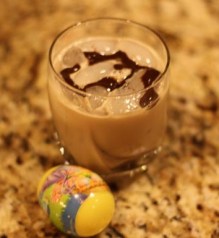
3. Do you have the ingredients for an Easter Bunny cocktail for after dinner? This one is a real crowd pleaser, and because it is sweet, it works well as a postprandial drink.

Easter BunnyEasterBunny
From drinksmixer.com
1½ oz. dark crème de cacao
½ oz. vodka
1 tsp. chocolate syrup
1 tsp. cherry brandy (Kirschwasser)
Pour crème de cacao and vodka into a shaker filled with ice and shake forty times. Strain into an old-fashioned glass filled with ice. Float cherry brandy on top and drizzle with chocolate syrup.

Oh, and if you don’t have dark crème de cacao, don’t worry about it. The different colors of crème are there for aesthetic reasons only and do not affect the taste.

Lastly, this year the Foleys are going to tweak the Easter Bunny a little and experiment with an “Easter Bunny Deluxe.”

If you try it, let me know what you think.

Easter Bunny Deluxe
1½ oz. dark crème de cacao
½ oz. vodka
1 tsp. chocolate syrup
1 tsp. cherry brandy (Kirschwasser)
1 cherry
Drizzle the inside of a cocktail glass with chocolate syrup. Pour crème de cacao, vodka, and Kirschwasser into a shaker filled with ice and shake forty times. Pour into the cocktail glass. Garnish with cherry.

A blessed Triduum and a glorious Easter to you all!

St. Patrick’s Day Customs, Ancient and New

Hello Fellow Drinkers With the Saints!

You may have noticed that I have more or less observed radio silence during this season of Lent, but today calls for an exception. Even though St. Patrick’s Day is not technically a first-class feast that trumps the days of Lent, it is for many Irishmen–and indeed, a lot of dioceses in the United States with large Irish-American populations grant exemptions to Lent on this day. That doesn’t make today Mardi Gras, of course, but it does mean that we can post some drinking suggestions for the day.

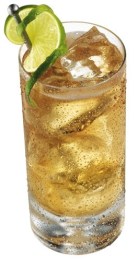
Drinking With the Saints offers a long list of Irish potables, especially in the category of beer and whiskey. And regarding cocktails, besides the ever popular Irish Coffee (which may be just the thing depending on the weather outside), we include the recipe for the recently invented Irish Ale Cocktail. It only dawned on me after the book’s publication that the Irish Ale Cocktail is more or less an “Irish Mule,” which is like a Moscow Mule except that it substitutes vodka for an Irish whiskey.  Here is the recipe now:irish ale cocktail

Irish Ale Cocktail
2 oz. Irish whiskey
3 oz. ginger beer
3 lime wedges
Fill a highball glass with ice–or a copper mug if you have one. Squeeze the lime into it and then pour in the whiskey. Top with the ginger beer and stir gently.

Customs

You can combine your newfangled Irish Ale/Irish Mule (or a dram of good Irish whiskey) with some venerable Irish customs on this day, such as:

  1. When you toast, say “Slainte!” (SLAUNCH-uh), which is Irish Gaelic for “To your health!”
  2. Prove to others that you are both knowledgeable and pretentious by referring to Irish whiskey as simply “Irish,” in the same way that you call scotch whiskey “scotch.” For this indeed is the correct usage, even though it sounds odd to the untrained ear.
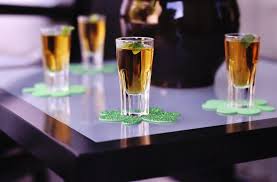
  3. Observe the St. Patrick’s Day custom of Pota Phadraig (“Patrick’s Pot”) Also called drowning the shamrock“drowning the shamrock” because a clover leaf is sometimes floated on the drink, the custom simply involves drinking a full measure of whiskey in memory of a legend about St. Patrick and a stingy innkeeper who gave him a glass of whiskey that was far from full. Patrick told the man that a devil was living in his cellar which was causing him to be stingy and dishonest and that the only way the man could banish the devil was by filling each glass to its brim. When Patrick returned to the inn later, he saw that each cup was full and proclaimed the devil duly exorcised. Even if whiskey is not your cup of tea, the legend is a good lesson in generosity.

By the way, does anyone know how to pronounce Pota Phadraig?

A Happy St. Patrick’s Day to one and all! May the Apostle of Ireland who brought the light of the Gospels to an entire island nation do the same again–for us, and for all the sons and daughters of Erin.

St Patrick