Drinks for Junipero Serra, and a Saints’ Trivia Contest

Juniperro-serra

Next Wednesday, September 23rd, Pope Francis will canonize Father Junipero Serra Ferrer, O.F.M. (1713-1784), the great Franciscan missionary to Alta California and the founder of the first nine of the twenty-one California missions. (For more on Fr. Serra’s life, see pages 151-152 of DWTS.)

This calls for a drink! Let us turn, then, to the grape and to the berry.

Wine
Fr. Serra and his Franciscan confrères brought the first wine grapes to California; one of the missions he founded, Mission San Juan Capistrano, is possibly the first to have grown grapes, which is why it was nicknamed Viña Madre (Mother Vineyard).
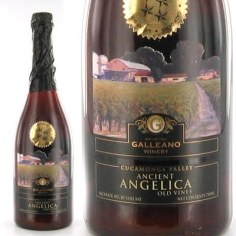
mission-bell-finalSo how about a California wine? Any one of them will do, since they tend to be consistently good. Or, find a California wine called Mission Bell, named in honor of the state’s mission history. And for a special treat, try to track down some Angelica wine, a port-like fortified dessert wine made from the Mission grape with a process developed by the Franciscan missionaries.
angelica wine

Gin
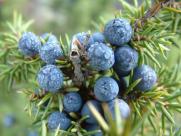
Father Serra was baptized Michael but took the name Junipero when he became a Franciscan in honor of a companion of St. Francis of Assisi, Brother Juniper. And, of course, juniper is the traditional main botanical ingredient of gin: in fact, “gin” is an abbreviation of genever, the Dutch word for juniper. Juniper is still used in the
juniper berries

Juniper berries

distillation of decent gins, while really cheap gins merely have juniper flavoring added to neutral grain alcohol. Gordon’s London Dry Gin is a very affordable gin still made from juniper berries, and so are higher-end options like Tanqueray, Bombay Sapphire, and Hendrick’s.

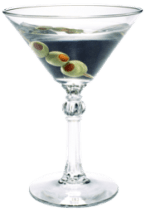
Ah, but how to serve your juniper? We recommend sticking to the basics with either a Martini or a Gin and Tonic.

Gin MartiniMartini clipart
2 oz. gin
1 dash dry vermouth
1 lemon twist or olives
Pour ingredients into a shaker filled with ice and shake forty times, or pour into a mixing glass filled with ice and stir until very cold. Strain into a cocktail glass and garnish with lemon twist or olives.

Gin and Tonicgin-and-tonic-646
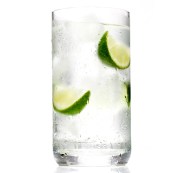
1½ oz. gin
tonic water
1 lime wedge
Add gin to a highball glass filled with ice. Fill with tonic, and squeeze lime into it. Stir gently.

And…. A Trivia Contest!
Junipero Serra will be the first saint ever canonized in the U.S.A. (in Washington D.C.’s Basilica of the National Shrine of the Immaculate Conception, to be precise). After you have filled the glasses, test your knowledge of other fun facts about American Catholic hagiography. Winners get their drinks topped off and losers have to do the dishes.

1.  Including soon-to-be-canonized Junipero Serra, how many American saints are there?
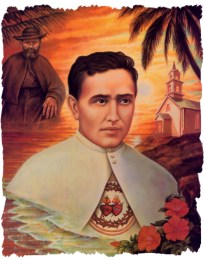
Damien of Molokai

St. Damien de Veuster

A: It depends on your definition of “American.” St. Damien de Veuster, for example, labored in Hawaii, but at the time it was the Kingdom of Hawaii under the effective rule of Great Britain. If by “American” if you mean someone who lived or died within the territory of what is now one of the fifty states that comprise the U.S.A., then the answer is thirteen:

1-3. Three of the North American Martyrs–See below.
4. Frances Xavier Cabrini (1850-1917)
5. Elizabeth Anne Seton (1774-1821)
6. John Neumann (1811-1860)
7. Rose Philippine Duchesne (1769-1852)
8. Katharine Drexel (1858-1955)
9. Theodore Guerin (1798-1856)
10. Damien de Veuster (1840-1889)
11. Marianne Cope (1838-1918)
12. Kateri Tekakwitha (1657-1680)
13. Junipero Serra (1713-1784)

Pedro Calungsod

Pedro Calungsod

And if you mean any saint who lived in what is now U.S. territory, the answer is fourteen, since St. Pedro Calungsod (1655-1672) was martyred in Guam while catechizing the indigenous Chamorro people. Personally, since the Stars and Stripes currently fly over the ground that received the holy blood of Saint Pedro, I am going to go with fourteen as my final answer.

Also keep your eye out for the possible canonization of Blessed Carlos Manuel Cecilio Rodríguez Santiago (1918–1963), the first Puerto Rican and first Caribbean-born layperson to be beatified.

Blessed Carlos

Up-and-comer? Blessed Carlos of Puerto Rico.

2.  How many of these American saints were U.S. citizens?

US citizenA: Probably seven. Sts. Elizabeth Anne Seton and Katharine Drexel were native U.S. citizens, and Sts. John Neumann, Frances Xavier Cabrini, and Marianne Cope were naturalized U.S. citizens. And I am guessing that the two French-born saints, Rose Philippine Duchesne, who died in Missouri in 1852, and Theodore Guerin, who died in Indiana in 1856, were naturalized as well but I was not able to confirm this. Anyone who can clarify gets a free round.

Did you notice from this list that there is no male saint born as a U.S. citizen? Time to step it up, gentlemen.

3.  How many of the American saints are martyrs?

A: So far, three. All of them are among the eight North American Martyrs. St. Rene Goupil (1642), St. Isaac Jogues (1646), and St. Jean de la Lalande (1646) were martyred in present-day Auriesville, New York. The other five North American martyrs, on the other hand, were killed in present-day Ontario, Canada: St. Antoine Daniel (1646), St. Jean de Brebeuf (1649), S. Noel Chabanel (1649), St. Charles Garnier (1649), and St. Gabriel Lalemant (1649).

And again, if you’re including Guam as a U.S. territory, then you must add St. Pedro Calungsod (1655-1672) to make the number four.

4.  Who is the first U.S. citizen ever canonized?

A: The Italian-born Mother Cabrini (1850-1917). Technically, she was born in the Austrian Empire, became a naturalized U.S. citizen in 1909 (after years of missionary work in this country), and was canonized by Pope Pius XII in 1946.

5. Who is the first native-born American saint to be canonized?

A: Mother Elizabeth Anne Seton (born in New York in 1774 and died in Maryland in 1821) received that honor when she was canonized by Pope Paul VI in 1977.

6. Who is the earliest native-born American saint?

A: St. Kateri Tekakwitha (1657-1680) was born in what is now Auriesville, New York and died in Canada, south of Montreal. She was canonized by Pope Benedict XVI in 2012.

Kateri Tekakwitha

St. Kateri, the Lily of the Mohawks

You may also be interested in the roster of American beatifieds, venerables, and servants of God. See the list on the ever-reliable Wikipedia.

Did I get any of my facts wrong? If so, please let me know on our DWTS Facebook page!

Throw a Holy Name of Mary Party

Our Lady of Czestochowa

Saturday, September 12, is the Feast of the Holy Name of Mary. The day celebrates one of the three things that the Devil once admitted to St. Francis of Assisi he was afraid of (the Holy Name of Jesus and the brown scapular being the other two).

September 12 was chosen as the date for this feast thanks in large part to the Battle of Vienna in 1683. On September 12 of that year, the Polish king and warrior Jan III Sobieski saved the city of Vienna, Austria, from the Turkish army in a spectacular military victory that changed the course of history. Sobieski made a bold assault over a mountain range, and when the shouts of his Hussar cavalry “made known that the ‘Northern Lion’ was on the field… the Turks fled, panic-stricken.” Sobieski attributed the victory to God and to Our Lady of Częstochowa, whose intercession he had sought at her shrine in Poland before marching to battle. Amending a famous saying of Julius Caesar, Sobieski later wrote: Veni, vidi, Deus vicit— “I came, I saw, God conquered.”

Sobieski

King John Sobieski of Poland: Stay thirsty, my friends.

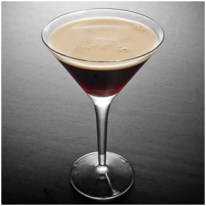
Which brings us to throwing a Holy Name of Mary Party. For the beverage, we recommend a Sobieski Espresso, which combines two things associated with the Battle of Vienna: Sobieski (or the smooth vodka bearing his name), and coffee. Cappuccino, or “little Capuchin,” is said to have been invented by a beatified Capuchin friar named Marco d’Aviano who used coffee beans left behind by the hastily retreating Turks.

Sobieski Espresso

1 oz. Sobieski Espresso Vodka (regular Sobieski vodka works too)
1 oz. Kahlua
1 oz. fresh espresso
Raspberries for garnish
Pour all ingredients except raspberries into a shaker with ice and shake forty times. Pour into a chilled cocktail glass. Garnish the drink with raspberries, using a sword-shaped cocktail spear in honor of Sobieski. Optional: rim the glass with crushed chocolate-covered espresso beans.

sobieski espresso            And for something to snack on, how about croissants and bagels? According to one legend, the Turks tried to tunnel under the city’s walls in the early morning when a baker heard them and notified the Viennese troops in the nick of time. After the battle, the baker was rewarded with a patent to produce a bread commemorating the victory over the Turks, whose flag bore a crescent, the symbol of Islam. The result: the croissant, which is French for crescent.

And according to another legend, bagels are so shaped in honor of the stirrups of the brave Jan Sobieski. Whether these legends are true or not will matter less to you after your second Sobieski Espresso.

croissant and bagel

Lastly, for a toast, you can use Sobieski’s Veni, vidi, Deus vicit or a verse taken from the Litany of Divine Praises: “Blessed be the name of Mary, Virgin and Mother.” Heck, why not use both?

Drink Pray Love

I am very pleased to announce “Drink Pray Love,” a program designed for parishes, couples, and other adult groups that combines the fun of Drinking With the Saints with prayerful Catholic fellowship. “Drink Pray Love” is a great idea for your next book group or as a part of your parish’s lay ministry. Tell your pastor!

“Drink Pray Love” now has its own page on this website, and you can also download a pdf of the program.

Know Thyself, O Drinker

Know your limits evolution

The injunction to “Know thyself,” which most famously appears inscribed at the entrance to the Oracle of Delphi in ancient Greece, became the great clarion call of Socrates and of all philosophy in his wake. Christianity was quick to follow suit; the French scholar Pierre Courcelle once assembled, in three hefty volumes, all the references he could find to this aphorism from Socrates to Saint Bernard of Clairvaux, the bulk of which were from the Church Fathers.

“Know thyself” is also an important component in healthy drinking. Every virtue reliesKnow-Thyself-300x250 to a certain extent on self-knowledge because every virtue requires consistently hitting the mean that is relative to me. And how can I know what is relative to me if I don’t first know myself or certain things about myself?

So what does self-knowledge look like with respect to alcohol consumption? It entails having a basic knowledge of how you are going to react to alcohol based on factors such as:

  • Your Weight. Big folks tend to be able to hold their liquor better than smaller because their bulk can better absorb the impact. This is especially true if that bulk consists of muscle rather than fat (see below under Sex).
  • Your Metabolic Rate. Faster metabolism means faster neutralization of alcohol. Metabolism typically slows down with age, especially after the age of forty, so in order to continue to know thyself, you will need to recalibrate your self-knowledge over the course of your life.
  • Your Genetic Makeup. According to some, your race can be a factor. It has been suggested, for example, that Native Americans have the highest rate of alcoholism in the world because they lack an enzyme that helps to break down alcohol in the stomach; and Asians are believed to be more vulnerable to the effects of alcohol for a similar reason. That said, don’t think of yourself as invincible just because you have no Cherokee or Japanese blood.
  • Your Level of Fatigue or Dehydration. Greater fatigue means greater chances of intoxication, and the same goes if you are dehydrated. Indeed, staying hydrated, both before and during the time you consume alcohol, is crucial to avoiding inebriation. And remember: there are many ways to become dehydrated. Sitting in a jacuzzi, for example, draws huge amounts of water out of the body, which is why hot tubs and scotch do not mix. I will spare you the painful details about how I know this to be true.
  • How long it has been since your last meal. Food in the tummy cushions the blow, so never drink on an empty stomach. Besides, we’ve already preached that sacramental drinking typically involves pairing food and drink.
  • Your Sex. Muscle tissue absorbs alcohol more rapidly than fat, with the result that less alcohol finds its way into the bloodstream to cause intoxication. Women therefore tend to be more affected by alcohol than men because they tend to have more body fat and less muscle tissue.

Know Your Limits

Know What Thou Art Drinking

You should also have a basic knowledge of alcoholic drinks and alcohol metabolism. For example:

  • A shot of whiskey (one and a half ounces) can contain as much alcoholIMPACTdrinking2Finalas a five-ounce glass of wine and a twelve-ounce glass of beer.

  • Not all beers are created equal. Especially with the advent of micro brewing, beers can vary in alcoholic content from 2-4% to as much 12%. I recently had a single pint of scotch ale, for instance, that was delicious but practically knocked me off my chair!
  • Carbonated alcoholic beverages like a gin-and-tonic or a glass of champagne can make you more intoxicated because carbonation increases pressure on the stomach lining, enabling the alcohol to pass through to the bloodstream more quickly.
  • Be cautious with sweet drinks. They hide the taste of alcohol, thereby encouraging the unsuspecting to drink fast and drink more.

Know Thyself, Last Call

Some scholars speculate that the “Know thyself” aphorism at Delphi meant for the ancient Greeks to “Know thy place” or “Don’t get hubristic.” To put that in more modern terminology, think of Dirty Harry’s second-most famous line: “A man’s got to know his limitations.” Somewhat similarly, we have been treating “know thyself” in this essay as if it meant “know thy body and its changing and often peculiar limitations,” which it does to a certain extent. But we must hasten to add that this is not all that knowing thyself entails. Equally if not more important when drinking is moral self-knowledge, that is, knowing what circumstances or stimuli are morally dangerous to your soul (some of these circumstances may be fairly predictable, others less so).

Imago DeiLastly, there is the self-knowledge of knowing that we are made in the image and likeness of God—specifically, that our mind, the highest part of your soul, is somehow a reflection of and participation in the very life of the Holy Trinity. Being stamped with this incredible dignity is the ultimate motivation for wanting to know our limitations at the bar and avoiding any state or condition that tarnishes the luster of this great honor.
Practical Tips for College Drinking From a Catholic Theologian

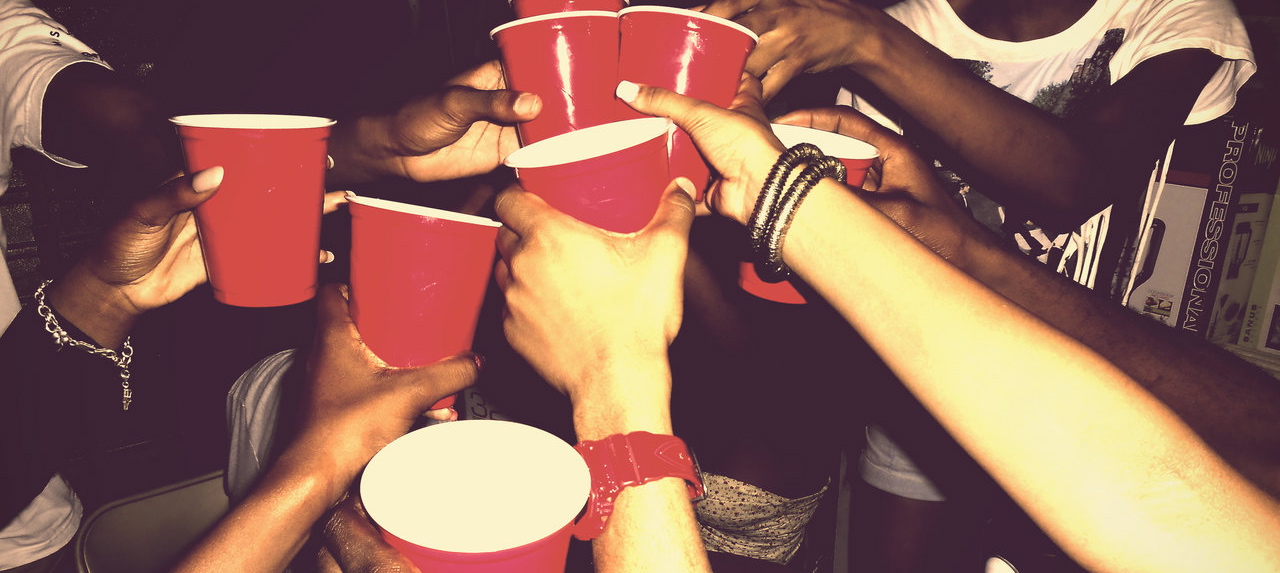
red solo cup

In our last two blogs (here and here) we extolled the virtues of “sacramental drinking”–the art of drinking virtuously and with a Catholic sacramental imagination– and we held up this model as a superior alternative to the drinking culture typically found on college campuses today. As a part of this ongoing conversation and in preparation for the new school year, we now offer a few specific tips on how to survive college with both your liver and integrity intact.

bad friends

1.  Avoid bad friends. Beware of what St. Augustine calls “friends unfriendly,” buddies who will egg you on to ever greater vice and make you ashamed to be ashamed of indecent behavior. These are the kind of people who will dare you to get into trouble and then promptly desert you once you do. They are also more likely to lead you into bad social situations.

college party

2.   Avoid bad parties. Frat parties are the proverbial epitome of a dangerous event where binge drinking, brawls, and sexual assault abound, so heed Vergil’s famous warning and beware of Greeks bearing gifts. That said, not all Greek fraternities conform to the stereotype, and some can even be respectable. Ask around about a fraternity or sorority’s reputation before attending one of its functions. And conversely, remember that not every bad party is going to be sponsored by a member of the Greek system. Non-Greek parties can be just as perilous if not more, as they may not have the same institutional restraints placed on them from above.

friends-having-wine-party   college-guys-drinking1
Yes.                                                              No.

3.   Fill up your time with good things. It is much easier to avoid the bad when your life is filled with the good. The traditional spiritual advice for combatting lust does not involve sitting in a room and trying not to think of lustful images (which becomes self-defeating) but thinking of something else instead. Which way is easier to get air out of a bottle: hooking it up to an elaborate vacuum, or filling it with water? So fill your life with positive, good things and you won’t crave the bad. Questionable get-togethers will not be even a temptation for you if you already have a group of good friends who are capable of enjoying each other’s company without being liquored up. A round or two with them at a friendly pub or coffee house will be infinitely more attractive than the rave at the local Animal House.

pint-glass-counter-bar-pub-birthday-party    college-party2
Yes.                                                              No.

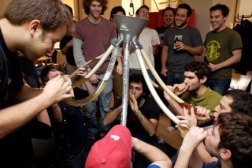
4.   Make leisurely use of your free time. Too many people in our society, students included, have a “work hard, play hard” mentality. Maybe “the play hard” aspect is acceptable in the case of vigorous sports, but even here it is not a good thing if it is the only use of your free time. Free time is for the sake of genuine leisure, a contemplative opening up of oneself to the higher things: friendship, love, beauty, truth, God. It is leisure that truly rejuvenates, but more than that, leisure is the relaxing and rewarding exercise of the best and highest part of ourselves. Having a beer or two with friends and engaging in stimulating conversation is an example of genuine leisure; doing jello shots with a gaggle of hooting philistines is not. One should never, ever party hard; always party soft and gentle.

pearl-01

5.   If, despite these precautions, you find yourself in a less-than-ideal social gathering, be like the pearl oyster mentioned by St. Francis de Sales that “lives in the sea without ever taking a drop of salt water.” By this I do not mean that you should never have a drop of whatever liquid refreshment your hosts are offering (although do be careful there) but that you should not have a drop of whatever unhealthy vibe they may be emitting. One obvious example is to abstain from all drinking games, which are a sure path to short-circuiting good judgment and self-control.

One of my favorite saint stories is from the life of St. Alphonsus Liguori, who loved to hear the music at the “Broadway Shows” of his day but did not want to be corrupted by the impure scenes on stage. His solution was to attend the show but to take off his glasses so that he couldn’t see what was happening.

Odd as it may sound, this is not a bad strategy when you find yourself stuck in an unfavorable environment. College parties typically feature loud music, a keg in the corner, and the ubiquitous red Solo plastic cup—recognizable to generations of Americans as an icon of unimaginative and juvenile bacchanalia. A comparable “St. Alphonsus solution” of tuning out the bad would be to walk around with your Solo cup filled with water or soda so that others will not try to fill it with beer or put a fresh one in your hand, and to find a quiet corner to have a decent conversation with someone about how awesome your Great Texts class is.

st alphonsus

St. Alphonsus Liguori

(Note: My Alphonsus/Francis de Sales advice is for situations that are “less than ideal” as opposed to truly violent, reckless, lewd, offensive, etc. In the case of the latter, don’t wait for your ride but get out of there as fast as you can. There’s only so much a good oyster can take.)

The last piece of advice, for drinkers both in and out of college, is to know thyself. To this important topic we shall turn in our blog next week.

What is Sacramental Drinking?

10784278-open-book-of-nature--Stock-Photo-family

Last week I made the bold suggestion (bold to an American mindset anyway, and downright scandalous here in central Texas) that we introduce our children to drinking at a relatively early age. In that blog I referred to the kind of drinking to which we should introduce our children as “sacramental drinking.” However, I failed to define what that actually is. Today I will try to do so.

By “sacramental drinking” I do not mean receiving Holy Communion under both kinds but drinking in a way that reflects a sacramental worldview. Sacramental drinking has two aspects. The first is recognizing all creation as a sacramentum or “divine sign” pointing to some aspect of God’s goodness and love for us. The Church Fathers, for example, saw the great Book of Nature as a series of sacramenta which, when read correctly, eloquently reveals attributes of its Author and His order.

The Catholic Church continues to view all created things in this manner, and that includes our alcoholic beverages.  Consider the following blessings for beer and wine, taken from the traditional Rituale Romanum:

priest blesses beer

The Rev. Chad Partain offers a traditional blessing of beer on St. Patrick’s Day at Finnegan’s Wake Pub in Alexandria, Louisiana. Photo by Melinda Martinez.

Blessing of Beer

Let us pray.
Lord, bless this creature beer, which by your kindness and power has been produced from kernels of grain, and let it be a healthful drink for mankind. Grant that whoever drinks it with thanksgiving to your holy name may find it a help in body and in soul. Through Christ our Lord.
℟. Amen.

Blessing of Wine for the Sick

Let us pray.
Lord, Jesus Christ, Son of the living God, who in Cana of Galilee changed water into wine, be pleased to bless and to hallow this creature, wine, which you have given as refreshment for your servants. And grant that whenever it is taken as drink or poured into wounds it will be accompanied by an outpouring of grace from on high. Thou who lives and reigns forever and ever.
℟. Amen.

st-john-symbol

Blessing of Wine for the Feast of St. John the Evangelist

Let us pray.
God, who in creating the world brought forth for mankind bread as food and wine as drink, bread to nourish the body and wine to cheer the heart; who conferred on blessed John, your beloved disciple, such great favor that not only did he himself escape the poisoned potion but could restore life by your power to others who were dead from poison; grant to all who drink this wine spiritual gladness and everlasting life. Through Christ our Lord.
℟. Amen.

Note the presuppositions that are operative in these blessings, especially the parts that I have italicized. Beer is a product of God’s kindness; He gave us wine to refresh us and to cheer our hearts. In other words, alcoholic beverages are a product of, and hence testimony to, God’s goodness and loving kindness. They are a sacramentum or divine sign that points us to the loving Creator of both them and us.

Side Note #1: I am struck by how these blessings emphasize God’s role in the existence of beer and wine rather than man’s. Whereas the offertory prayers in the Ordinary Form or new rite of the Mass refer to wine as “fruit of the vine and the work of human hands,” the traditional blessings speak of God as “producing” beer and “giving” and “bringing forth” wine. Obviously, both statements are correct, but thinking of God as the Maker of strong drink both affirms the goodness of alcohol and guards against human self-congratulation, which is a particularly tempting vice where technological mastery is involved. O noble home brewer, beware thou of pride! Remember that your Mr. Beer Home Brew Kit® may have planted, and you may have watered, but it is Almighty God who gives the bubbly increase.

Side Note #2: I could not find in the prayers of the Church similar praise for strong spirits such as whiskey, gin, or vodka, but hey, ours is an organically developing tradition, so keep your fingers crossed. A hundred years ago, the Roman Ritual didn’t have a blessing for a seismograph or an automobile either, but it does now.

Side Note #3: Don’t you just love the reference to beer as a “creature”? That surprised and amused me the first time I read it. Today, of course, that word is used to distinguish an animal or living thing from a human being, but originally it meant anything that was created by God—inanimate, animate, or human. So it is good that we keep the language of “creature” as a reminder of the creaturely character of things.

I mentioned that sacramental drinking has two aspects, so let us now turn to the second. If alcohol is a gift from God and a divine sign pointing back to Him, the appropriate reaction is not to abuse it but to use in keeping with the mind and intention of the Giver. In Chesterton’s famous formulation, “We should thank God for burgundy and beer by not drinking too much of them.” Sacramental drinking therefore involves not only perceiving reality as suffused with divine significance or “charged with the grandeur of God,” but also of responding to such enchanted meaning with gratitude, moderation, and good Christian cheer. Prosit!

Introducing the Young to Sacramental Drinking

Drinking Wine

Last week we discussed the perils of college drinking and the responses of Catholic colleges to it. This week, let’s continue our discussion on more positive ways to engage the problem. I have one bold suggestion: Start early and under parental supervision.

One of our blog’s readers last week recommended “bending the law” and introducing one’s children to the moderate use of alcohol at the dinner table. Actually, in many states, this is not bending the law at all but in perfect conformity with it.

The advantage of “drinking early” is twofold. First, it teaches young people to pair alcohol with food and to drink in moderation; its sets a model for the right use of alcohol and cultivates a good habit that can last a lifetime.

Second, it de-stigmatizes alcohol, removing it from the category of a forbidden fruit or an adolescent symbol of rebellion and placing it in the category of a virtuous and even pious life. Such a sensibility will go a long way in instilling a healthy attitude towards alcohol. I am told that the ethnic-religious group with the lowest rate of alcoholism is the world is Orthodox Jews, and that the more secular and less observant the Jewish person, the greater the likelihood of alcohol abuse. Are Orthodox Jews teetotalers? Not at all: wine is an important religious element of their diet. And precisely because of this, wine does not have a “naughty” or rebellious connotation the way that it might for a Southern Baptist.

Purim_medium

An ultra-Orthodox Jew pours wine for worshippers during Purim.

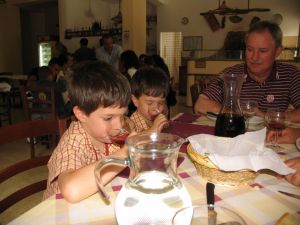
Similarly, while the United States has an alcoholism rate of 5.5%, Italy has an alcoholism rate of only .5%. Again, it is hardly the case that Italians refrain from drinking; on the contrary, they drink all the time, but they do not drink to excess. To this day, when you see a drunk walking the streets of Italy, it is most likely an American tourist.

italian family

An Italian family enjoys wine with their pasta.

Now I am not saying that you should give Junior a stiff martini after a long day at kindergarten, but watered down wine or small sips of Dad’s beer might be appropriate for at least the older kids. (A priest friend of mine once wisely suggested that I give my children small servings of wine mixed with water every time a priest came for dinner, so they would associate a priest’s visit with a festive treat.) You may want to wait until your offspring are around the age of 21 to introduce them to cocktails, which require special skill in consuming rightly. And when initiating your older children into the fine art of appreciating good whiskey (scotch, bourbon, Irish), focus on educating their palate so that they will become sipping snobs rather than shot-slamming sots.

At the very least, children should be able to grow up in a household where they can observe their parents consuming alcohol in a responsible and pious manner. Proper role models are crucial. Let them see firsthand “sacramental drinking,” drinking in moderation and with gratitude for the goodness of God’s creation.

Instilling good habits and a healthy attitude towards alcohol sooner rather than later may not be a cure-all for college drinking, but it is more likely to produce mature students who are less likely to be attracted to the typically destructive drinking culture on college campuses.

Addendum #1, added a day later: Here is a fascinating personal testimony from a reader on Facebook. Thank you for sharing!

When I last went to Spain with Guillermo (now 17) he was three. Children drink milk or watered down wine with supper. So he got to taste it while there. When we got back to the States and went to a restaurant for the first time and the waitress asked what the child would like to drink with supper, he confidently piped up and said, “yo quiero vino!” (I want wine). The woman nearly fell over! I had to explain we were just back from Spain and how children drink watered down wine. She was appalled. As a child, we grew up allowed to take sips of my dad or mom’s drink during supper too. None of my sisters nor I ever had a drinking problem in college (most common) and couldn’t understand drinking for fun. So I agree 100%.

College Sots, or College Saints?

Belushi

I was recently interviewed by the Cardinal Newman Society about drinking on Catholic college campuses (for the article, click here). What I said can basically be boiled down to three points:

1. College drinking, Catholic colleges included, is a serious problem. You can check out the alarming statistics here.

2. Catholic colleges are in a tight spot. They are inheriting problems created by high school drinking, and they are being pressured by secular forces to view excessive drinking as a problem merely because it is a public safety issue and an issue that, on account of date rape and other forms of sexual assault linked to it, violates mutual consent between two adult sexual partners (which is pretty much now the only form of adult sexual activity of which our society disapproves). Binge drinking and the like are public safety issues, and sexual assault is wrong, but Catholic colleges and universities should be viewing and treating college drinking through the robust lens of Christian morality and not simply this pale and reductionistic lens.

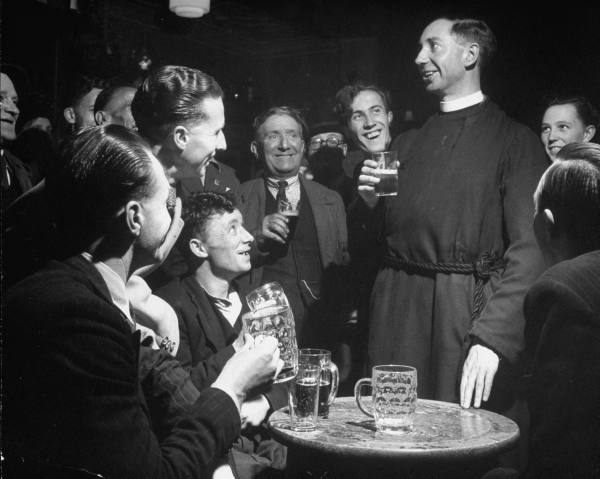
3. Thanks to the current legal age limit, one resource that is not available to colleges–at least with respect to most of their underclassmen–is teaching the youth how to drink properly. Odd as this may sound, it is better than the current alternative, namely, leaving the youth to learn from each other, which is the clearest case of the blind leading the blind that one can possibly imagine (aside from imagining two people that are literally blind, of course). By contrast, I was once told that when my alma mater Santa Clara University in California was an all-male institution, the Jesuit fathers would open up their bar to students every Tuesday for a happy hour. Their goal was not to spread vice but to teach virtue, that is, to have responsible and conscientious priests show their students how to practice the moderate art of drinking in combination with enjoyable and intelligent conversation. For they knew that like any other skill or moral excellence, a person learns best when imitating the right actions of a mentor. But back then, the legal drinking age was eighteen.

Priest-drinking-in-a-pub-during-a-revival-of-the-Church-of-England

I am not saying that we should necessarily return to the eighteen-and-older law on alcohol consumption, but surely there are ways that we can pop the destructive bubble of the college drinking culture and replace it with a higher, more sacramental mode of drinking. I recently learned that the word “sot” currently means drunkard but originally meant fool. Is there no way to teach today’s poor college sots, in both senses of the word, to eat and drink wisely unto the glory of God? (1 Cor. 10:31). Or will the concern at Christian institutions go no further than worries about legal liability and whether or not consent was soberly obtained before acts of fornication?

You can sound off on our Facebook page.

How to Throw a St. James’s Party

Queimada

This Saturday, July 25, is the Feast of St. James the Greater, the brother of St. John the Apostle. St. James’s remains are believed to reside in Santiago de Compostela in Spain, which for hundreds of years was the second-most popular pilgrimage site in Europe (second only to Rome).

Aside from going on pilgrimage, what can you do to observe St. James’s Day? You can throw a party, of course. I have three drink recommendations:

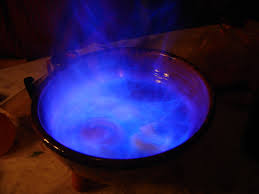
1. In the spirit of Compostela, make Queimada, or Flaming Galician Punch. Queimada is a traditional favorite in Galicia, the region of Spain where Santiago de Compostela is located. Be sure to make it at night and to turn off the lights to see the dance of the blue flames.

Queimada or Flaming Galician Punch
3 lemons
3 cups aguardiente (practically all of a 750 ml bottle)
1 cup sugar
2 tablespoons whole coffee beans
6 cinnamon sticks, broken in half
Peel the yellow part of the lemon rinds into long strips with a vegetable peeler. Add the lemon strips, aguardiente, sugar, coffee beans, and cinnamon sticks to a large heavy pot. Stir over medium-low heat; when the sugar dissolves, turn off heat. Carefully set the mixture on fire (use a long lighter or matchstick). Allow the mixture to burn until flame turns blue, about 3 minutes. Cover pot with lid to extinguish flame, or cover earlier if flames become dangerously high. Ladle into cordial glasses and serve.

This recipe, which has approximately twelve servings, gives a whole new meaning to “punch,” as in the fact that it really packs one. And you wouldn’t think that a warm drink on a summer night would hit the spot, but Queimada is refreshing and utterly delicious.

Ideally, Galician Aguardiente de Orujo is used. Start your search by looking for an Orujo Gallego, such as Sierra del Oso’s Aguardiente de Orujo; failing that, look for any Orujo, whether it is from Galicia or not; failing that, look for any aguardiente (“fire water”), the generic term for an aquavit that is made throughout the Hispanic world; and failing that, use any eau-de-vie or aquavit you can find.

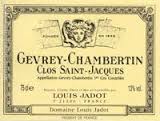
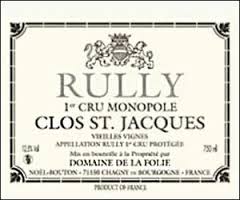
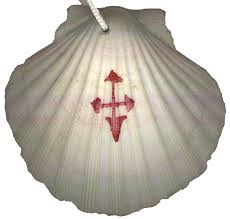
 2. Find a French wine with “St. Jacques” somewhere on the label (there is a LONG list of contenders). One reason that at least some of these wines are named after St. Jacques/James is that their vineyards contain fossilized scallops and other seashells, and the scallop is a symbol of St. James (Compostela pilgrims traditionally wear them). You can also cheat with a California Sonoma wine made by the Sangiacomo [“Saint James”] Family Vineyard.

Saint Jacques De Siran    Saint Jacques Gevrey Chambertin  Saint Jacques Grand Chais    Saint Jacques Rully

3. Broaden your search to any bottle of beer, wine, or liquor with a shell on it (preferably scallop) or with St. James’s name. Cuba, for instance, has a Santiago de Cuba Añejo rum, although even with the end of the embargo I’m not sure it will get here in time.

Santiago Scallop

Lastly, don’t forget the toast. If you are in a mellow mood, you can say ¡Buen Camino!, which is what the Spanish say to Compostela pilgrims.  Or if you are feeling feisty, channel the battle cry used by troops during the Reconquista of Spain and Cortez’ conquest of Mexico: Santiago! or ¡Santiago y cierra, España!, which means “St. James and close in on ‘em, Spain!”

Prosit!