Mardi Gras!

Mardi Gras masks

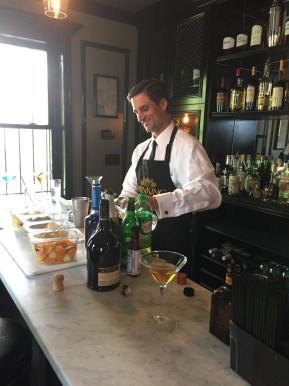
Mardi Gras is a great night to try one of New Orleans’ three classic cocktails: a Sazerac, a Ramos Gin Fizz, or a Vieux Carré (pronounced locally as voh care-eh).

Sazerac
1 splash of absinthe
½ tsp. simple syrup
2 oz. rye whiskey
2 dashes Peychaud bitters
1 lemon twist
Place absinthe in a well-chilled old-fashioned glass and swirl it around, coating the inside of the glass. Discard the excess. Build the other ingredients in the glass. Note: a Sazerac takes little to no ice.

Ramos or New Orleans Fizz
2 oz. gin
½ oz. lime juice
½ oz. lemon juice
2 tsp. sugar
½ oz. cream
1 egg white
2 dashes fleurs d’orange (orange flower water)
club soda
Pour all ingredients except club soda into a shaker filled with ice and shake eighty times or until your arms ache. Strain into a highball glass filled with ice and top with club soda. Note: If you cannot find orange flower water, substitute for ½ teaspoon of triple sec or, failing that, 3 drops of vanilla extract.

Vieux Carré
¾ oz. rye
¾ oz. cognac
¾ oz. sweet vermouth
1 dash Peychaud bitters
1 dash Angostura bitters
½ tsp. Bénédictine liqueur
1 cherry for garnish
Combine all ingredients except cherry in a mixing glass or shaker filled with ice and stir well. Strain into an old-fashioned glass filled with ice and garnish with cherry.

I wish all Drinkers with the Saints a bon Mardi Gras!

Drinking and Cooking with the Saints

Gourmet Gallery logo


“And when you fast, be not as the hypocrites: sad” (Mt. 6:16).

I am pleased to announce that on Friday, February 12, the first Friday of Lent, Waco’s Gourmet Gallery is teaming up with Drinking With the Saints for an evening of fun, food, and drink. Karyn Miller, the owner and founder of Gourmet Gallery, will be preparing some delicious meatless foods chosen to pair with the beer, wine, and cocktail suggestions of the day and season.

EWTN Foley 5-19-15

Mike Foley

What: A light sampling of Lenten foods such as “monastic” soup and Lenten drinks such as Salvator beer under the culinary guidance of Karyn Miller and the bartending advice of Mike Foley.

When: Friday, February 12, from 5:30 to 7:30 p.m.

Where: The Gourmet Gallery,2056 North Valley Mills Drive, Waco, Texas 76710 (across from The Grape and in the same shopping center as the Salty Dog Sports Bar.)

How Much: $25/person

How to Purchase a Ticket: Contact Karyn Miller at (254) 399-0429.

Space is limited, so buy your ticket today!
Gourmet Gallery Karyn Miller

Karyn Miller

Birra Nursia Comes to the U.S.!

Readers of DWTS may have noticed several references to the Monks of Norcia, Italy in the book, from the suggestion of mimosa for St. Scholastica’s Day to the recommendation of vin santo for the O-antiphon week prior to Christmas. But the monks’ main contribution to the world of alcohol is beer, which they started brewing several years ago. The beer has been available in Europe for about three years: complimentary cases, for instance, were sent to the 2013 conclave of Cardinals that elected Pope Francis–so you can thank or blame the Norcian monks for the current pontificate, depending on your point of view!

But now for the first time, the monks’ brew is available in the U.S.. Here is the official notice:

http://hosted.verticalresponse.com/884959/f9c71c3f9f/1482818789/3980b2c7b1/

It’s a bit pricey but until it can be shipped to our local liquor store, it’ll have to do.

Toasting and Praying

Angelus-1859.jpg!Blog

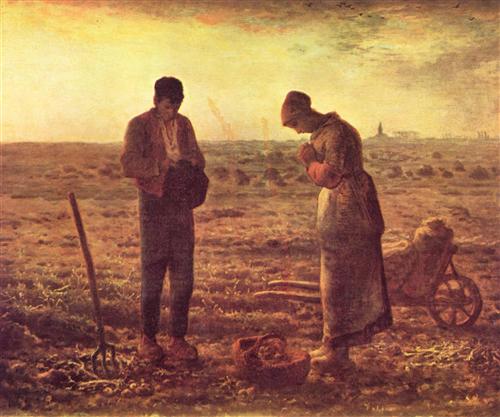
As an author on pious bartending, you know that you’ve drunk too deep of your own product when your first reaction to a new prayer is, “That would make a really good toast!” Such is the experience I had as I was combing through the old Raccolta (the pre-Vatican-II collection of indulgenced prayers and deeds) and came upon the following:

Joy and peace, amendment of life, room for sincere repentance,
the grace and comfort of the Holy Spirit, perseverance in good works,
be given to us by the almighty and merciful Lord.

What a beautiful prayer! And yes, provided that it is offered in the right spirit, I see nothing wrong with using it (and others like it) as a toast.

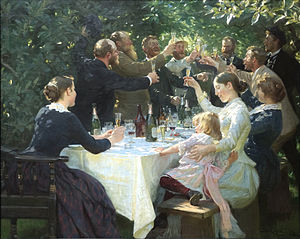
My reasoning is this: when a Christian disciple makes a toast, he is already saying an implicit prayer. When we say “To your health!” we are expressing a wish that the drink about to be consumed is conducive to someone’s health. And when we express a wish, we are basically asking that the wish be granted. But whom are we asking? Does an adopted son of God trust in fortune or chance? In princes or in his own might? Obviously, a Christian puts his trust in the Lord, and so his every wish, if his heart is properly oriented, is directed to God in loving supplication.

Hipp_hipp_hurra!_Konstnärsfest_på_Skagen_-_Peder_Severin_KrøyerAnd so, when Christians drink to someone’s health or longevity or prosperity, they are essentially asking the good Lord to grant health or longevity or prosperity. Similarly, when they say “Here’s to friendship or family!” they are essentially thanking God for the gift of friendship or family.

I believe that these ideas are present in the traditional Roman Rite’s blessing for beer:

Let us pray.
Lord, bless this creature beer, which by your kindness and power has been produced from kernels of grain, and let it be a healthful drink for mankind. Grant that whoever drinks it with thanksgiving to your holy name may find it a help in body and in soul. Through Christ our Lord.
℟. Amen.

Notice that this blessing expands upon the basic “To your health” toast by explicitly directing this wish to God. And it also includes the notion of thanksgiving, which is implied in every “Here’s to X” toast.

Now of course, toasting should not substitute for other forms of prayer, but it can have its place in a well-ordered Christian life. Perhaps it is even one of the ways that we can live up to St. Paul’s admonition: “Whether you eat or drink, or whatsoever else you do, do all to the glory of God” (I Cor. 10:31).

So here’s to toasting! Or rather, may our toasts be one of many prayers that rise like incense before the almighty and merciful Lord, and the lifting up of our glasses like an evening sacrifice.

Grutzner-Cisterian-monk

Keeping Your O With Vin Santo

Everyone has heard about the Twelve Days of Christmas, but did you know there is a hidden season eight days earlier? From December 17 through the evening of December 23, churches once echoed with special Vespers antiphons that begin with a different invocation of the coming Messiah each day: “O Wisdom,” “O Adonai,” “O Root of Jesse,” “O Key of David,” “O Dawn,” “O King of the Gentiles,” and “O Emmanuel.” This unique week of O Antiphons was the inspiration behind the the popular Christmas hymn “O Come O Come Emmanuel;” and so enchanted was this last leg before the Big Event that medieval monks would greet each other on these days with a friendly “Keep Your O.”

“Italian Sherry”

Another thing monks did to keep their O was to enjoy a glass of Vin Santo. Vin Santo (also spelled Vinsanto) is the generic name for an Italian dessert wine that is linked closely to the region of Tuscany. Vin Santos are usually white, made from local grapes such as Trebbiano and Malvasia—although Sant’Ántimo’s Occhio di Pernice is a rosé Vin Santo made from red Sangiovese grapes. The range of Vin Santo is considerable, from the very dry to the extremely sweet, which may be why they have been called the “sherries of Italy.” In Tuscany, almost every fattoria or farm has its own specialty Vin Santo, as small landowners still keep the tradition of making their own to offer guests as a gesture of hospitality and esteem.Vin Santo making

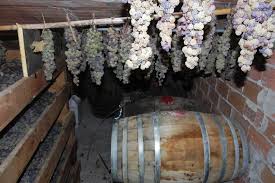
The process of making Vin Santo includes drying the grapes, crushing them, and fermenting and aging them in small barrels for three to ten years. Because the barrels are sealed and never topped up, oxidation occurs and the wine develops a lustrous amber color. Traditionally, home winemakers dry the grapes on straw mats under the rafters, which is the hottest and best ventilated part of the house. Similarly, they store the barrels in a part of the attic called a vinsantaia and wait for the summer heat to exhaust the unfermented sugars in the wine that still remain.

Holy Wine

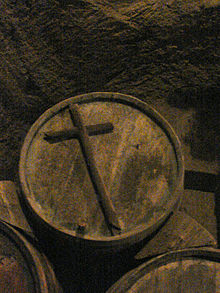
Vin Santo barrelVin Santo is Italian for “holy wine,” but it did not earn its sobriquet from being the monastic choice for a late Advent refreshment. According to one theory, these were the wines preferred for use at Holy Mass; according to another, fermentation traditionally began around All Saints’ Day on November 1 and bottling occurred during Easter Week. Either way, a cross is typically found on the chestnut or oak barrels used for aging.

Top Choices
There are dozens of wineries that make Vin Santo, with bottles ranging from $20 to over $300. Among the most affordable yet delicious options exported to the U.S. are Vin Santo Villa Puccini, Villa Puccini’s Santo Vino, and Badia e Colitbuono’s Vin Santo del Chianti Classico. Equally tempting is a Vin Santo named San Gimignano DOC, which comes in a sweet white or a rosé. You can also try to track down a bottle made by Antinori on its Santa Cristina estates, a six hundred year-old Italian winery with an impressive worldwide distribution.

Tasting Tradition
Today, the tradition of drinking Vin Santo during the week before Christmas is kept alive at the Monastery of San Benedetto, a community of traditional American Benedictine monks in Norcia, Italy. “Although our fast continues throughout Advent,” their website states, “in the O-antiphon week, following an ancient monastic tradition, we have a special glass of Vin Santo each night after Vespers, heightening even more the sense of joy to come.  The Church and Refectory combined help us to live the truth of our Faith in body and spirit.” When these monks aren’t drinking Vin Santo, incidentally, they are busy brewing their own beer.

For Christmas shoppers whose body and spirit are starting to flag, there may be no better remedy than drawing from monastic wisdom and rediscovering these fabled Italian wines.

Vin Santo_Biscotti

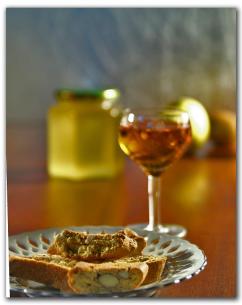
Vin Santo is traditionally paired with biscotti. In the spirit of holiday forgiveness, dunking is permitted.

Drinks for the Immaculate Conception

Our-Lady-of-WashingtonOn December 8, Catholics celebrate the Feast of the Immaculate Conception of the Blessed Virgin Mary, the doctrine that the Mother of God, by a special pre-application of the graces won by her Son on the Cross, was preserved from original sin. American Catholics have an extra reason to celebrate: Our Lady under the title of her Immaculate Conception is the patroness of the United States of America.

This calls for a drink! A White Lady cocktail is a good choice for honoring Mary’s purity.

White Lady
2 oz. gin
1 oz. triple sec
1 oz. lemon juice
Pour ingredients into a shaker with ice and shake forty times. Strain into a cocktail glass.

manhattan-1

The Manhattan

Or, pick any American cocktail classic—a Martini, Manhattan, Old
Fashioned
, etc.—as a way of dedicating American mixological ingenuity to the Queen of Heaven.

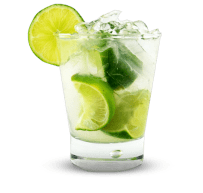
Finally, since Brazil’s  patroness is also Our Lady of the Immaculate Conception, you might consider a Brazilian favorite tonight. The Caipirinha (pronounced kigh-pur-REEN-yah) is made from a very sweet sugar cane liquor called cachaça that is more like an aguardiente than a light rum in its intensity. A higher-end cachaça is preferred in making a Caipirinha, since the drink does not disguise the flavor of the main ingredient. If you cannot find cachaça, you can do what folks sometimes do in Brazil: substitute it for vodka and have what is called a Caipivodka or Caipirodka.

Caipirinha Caipirinha
4-6 lime wedges (from ½ lime)
2 tbsp. sugar
3 oz. cachaça
Muddle the limes and sugar in an old-fashioned glass. Fill with crushed ice, add cachaça, and stir thoroughly.


Last Call
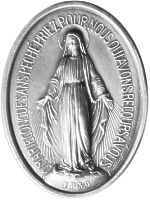
Whatever you choose to fill the glass with, borrow a page from the Miraculous Medal promulgated by St. Catherine Labouré and toast to Our Lady with the following: “O Mary, conceived without sin, pray for us who have recourse to Thee!”

miraculous medal


A Wet Catholic Thanksgiving

Not sure how to bring the Catholic spirit into the American celebration of Thanksgiving? Be uncertain no more! Just because Thanksgiving was begun by religious extremists fleeing from Protestant England because it was too Catholic does not mean that we cannot celebrate this great holiday with our own signature pious gusto.

Below is a top five countdown of Catholic drinks for Thanksgiving.

5.   Beer. Any Beer
I am partly inspired to make this recommendation by Chesterton’s line,
“We should thank God for beer and burgundy by not drinking too much of them.” But I am also inspired by the traditional blessing for beer from the Roman Ritual, which does not seek a blessing for just any old beer drinker but for the beer drinker who drinks with thanksgiving to God’s Holy Name:

Blessing of Beer

Let us pray.
Lord, bless this creature beer, which by your kindness and power has been produced from kernels of grain, and let it be a healthful drink for mankind. Grant that whoever drinks it with thanksgiving to your holy name may find it a help in body and in soul. Through Christ our Lord.
℟. Amen.

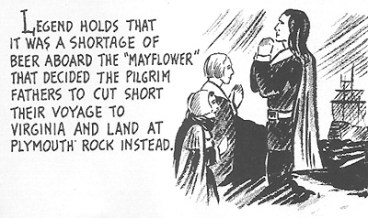
It should also be recalled that the Pilgrims brewed their own beer . (Finally, something Catholic and Puritans can agree on!) Forplymouthrockbeer Thanksgiving, fill the glass with the beer for which you are most grateful, or scour your local liquor store for Thanksgiving, Autumn, or Harvest-themed beers and ales.
 

4.  Pink Gin
In 1824 it was discovered that bitters could cure seasickness, and so toplymouth-gin1 encourage sailors to drink them, the British Royal Navy mixed them with something it knew its seamen would like—gin. To be more precise, the Navy mixed bitters, which give the drink its pink color, with “sweet” Plymouth gin instead of “dry” London gin.
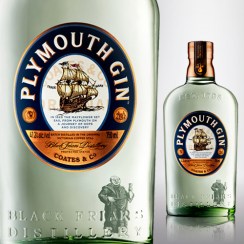
You can drink a Pink Gin on Thanksgiving in memory of the perilous sea voyage the Pilgrims undertook and in honor of the new Plymouth they founded. And if you use Black Friars’ Plymouth Gin, you can honor the Dominican Order as well.

Pink Gin
1½ oz. Plymouth gin, chilled
1 dash Angostura bitters
1 lemon twist
Take a chilled cocktail glass, add the bitters, and coat the interior of the glass with the bitters by swirling it around. Add gin and garnish with lemon twist.

But how is this specifically Catholic, you ask? Shut up and drink, I answer.


3.  White Lily
Did you know that Squanto, who in more ways than one saved the Pilgrims from perishing, was a baptized Catholic who had been emancipated and catechized by Spanish Franciscans after he had been enslaved by the English? See here for the full story.

Melissa Durant has created an intriguing cocktail called a Squanto which looks delicious but has some ingredients (such as pumpkin bitters) that may be hard to find. An easier option is to invoke the intercession of the Saints. Squanto was never canonized, but the earliest North American saint was likewise a Native American. St. Kateri Tekakwitha (1656-1680), Kateri Tekakwithaalso known as the “Lily of the Mohawks,” wouldn’t mind sharing the cocktail for her feast day in honor of her fellow Catholic.

White Lily
1 oz. Cointreau
1 oz. Daiquiri rum
1 oz. gin
1 dash absinthe
Pour ingredients into a shaker with ice and shake forty times. Strain into a cocktail glass.


2.   Florida
According to some historians, the first American Thanksgiving was not celebrated by the Puritans in Massachusetts but by the Spanish in Florida. On September 8, 1565 in St. Augustine, Florida, “500 soldiers, 200 sailors and 100 families and artisans, along with the Timucuan Indians celebrated the Holy Sacrifice of the Mass in gratitude to God” for their settlement. Honor this Catholic attitude of gratitude with a Florida cocktail:

Florida
1½ oz. grapefruit juice
¾ oz. Galliano
1 oz. gin
¼ oz. Campari
1 orange slice
Pour all ingredients except orange slice into a shaker filled with ice and shake forty times. Strain into a cocktail glass and garnish with orange slice.

St Augustine Thanksgiving

Mural on the wall of the Cathedral of St. Augustine depicting the first Thanksgiving.


1.   Martlemas Martini
Before sailing to the New World, the Pilgrims spent some time in Holland and became acquainted with the medieval Catholic custom of celebrating a thanksgiving harvest festival on the Feast of St. Martin of Tours, aka Martinmas or Martlemas. The main course for the feast was a goose, a fact the Pilgrims kept in mind when they celebrated a Thanksgiving feast of their own in their new colonial home; but because they could not find enough geese for their great banquet, they supplemented the menu with a bird unique to the North American continent. And that is how the Martlemas goose became the Thanksgiving turkey.

You can honor this indirect Catholic contribution to Thanksgiving by drinking a Martlemas martini, a DWTS original made with Grey Goose vodka. For the full story on the legend of St. Martin and the geese, kindly consult the Drinking With the Saints entry for November 11.

Martlemas Martini
2 oz. Grey Goose vodka
1 dash dry vermouth
1 lemon twist
Pour ingredients into shaker with ice and shake forty times. Strain into a cocktail glass. Garnish with lemon twist to represent St. Martin’s torn cloak.

Martlemas Martini Hyatt Washington

A Martlemas Martini, at the Hilton in Washington, D.C.

Do you have “Catholic Thanksgiving” drink suggestions of your own? Feel free to share them on our facebook page. Happy Thanksgiving!


DWTS Progressive Was a Success!

Last night we held our first Progressive for Drinking With the Saints, and it was a grand success.

Our fun began at Barnett’s Pub on Franklin Avenue in downtown Waco. I said a few words about the book, and participants were fêted with a bottle of Killian’s Irish Red in honor of one of the day’s saints, St. Kilian. Barnett’s manager Seth Higginbotham served us fantastic pizza flatbread treats, which he explained were part of a new menu Barnett’s was debuting this coming week. (In fact, all next week they are serving free lunches between 11 a.m. and 2 p.m.!).

Here are some of the forty friendly faces that joined us:

IMG_5183 IMG_5184 IMG_5186 IMG_5188 IMG_5191 IMG_5193

Next stop was Dichotomy Coffee and Spirits on Austin Avenue, where manager Andrew Anderson served us a delicious San Diego cocktail in honor of another feast day that falls on November 13, that of Saint Diego. I said a few more words about the book, and owner Alina Mikos told us a little about Dichotomy’s unique double commitment to fine coffee and fine spirits. Here is some of the Progressive Gang at Dichotomy:

IMG_5197 IMG_5201 IMG_5202 IMG_5206 IMG_5208 IMG_5209

Our final destination was the Wine Shoppe on Austin Avenue, where owner David Mayfield greeted us and told us a little about his shop and about the crisp and fruity Spanish wine he had chosen for us in honor of Saint Diego’s home region. (He also treated us to some excellent cheese and charcuterie that paired nicely with the wine.) And we toasted not only to a successful night, but to the engagement that very day of April and Michael, two of our participants!

We have fewer photos of this leg of our journey, as our photographer was getting a little tipsy at this point (grin). But here is a shot of me and my awesome wife Alexandra, who kept everything going behind the scenes.

IMG_8298

Our sincere thanks go out to the good folks at Barnett’s, Dichotomy, and the Wine Shoppe for making everything run smoothly and taste delicious, and for all our participating Drinkers with the saints!

Sorry you missed the Progressive or eager to go again? Don’t despair: we had such a good time, we hope to do this again in the future. Like us on facebook, and we will keep you posted!

IMG_5217

Throwing An All Saints’ Party

All-Saints

The great Feast of All Saints is fast coming upon us. An All Saints’ Day Party can be celebrated either on Sunday, November 1, or if you don’t mind the occasional interruption by trick or treaters, on Saturday, October 31, the Vigil of All Saints or All Hallows’ Eve.

But what to serve for drinks? On All Saints Day there is an embarrassment of riches.bottles 2 Since honoring all of the saints at once with every drink mentioned in Drinking With the Saints would wind you in serious trouble, our recommendation is to comb through the book and pick your top two or three libations.

Another option is to use this occasion to try a drink from the book you have been hankering to sample but have not had the opportunity to. According to Pope Urban IV, one of the purposes of All Saints’ Day is to compensate for any negligence in celebrating the saints’ feasts from the previous year. Surely, this principle can be applied to drinking with the saints.

Lastly, you can try a beverage named after the entire Communion of Saints. St. Peter’s Brewery in England makes The Saints Whisky Beer, a smoky, peaty beer infused with a measure of English Whisky from St. George’s Distillery (surprisingly, it only has an alcohol content of 4.8%).  There are also wines made in the Veneto region of Italy by Santi. The winery is named after its founder Carlo Santi, but Carlo’s last name means “Saints” in Italian.

Saints Whisky beer

A Cocktail for Pope Francis

Annuntio vobis gaudium magnum: Habemus potum—we have a new drink!

You needn’t be a saint to have a cocktail made in your honor. In the world of mixology, you can order an Arnold Palmer, a Shirley Temple, a Mary Pickford, and a Rose Kennedy (see here). Oh, and Bloody Marys are named after Queen Mary I of Tudor.

Pope francisIt is in this spirit that Drinking With the Saints proudly announces a new cocktail marking Pope Francis’ visit to the United States this week:
Taste of Mercy
1½ oz. bourbon
½ oz. Monin pomegranate syrup
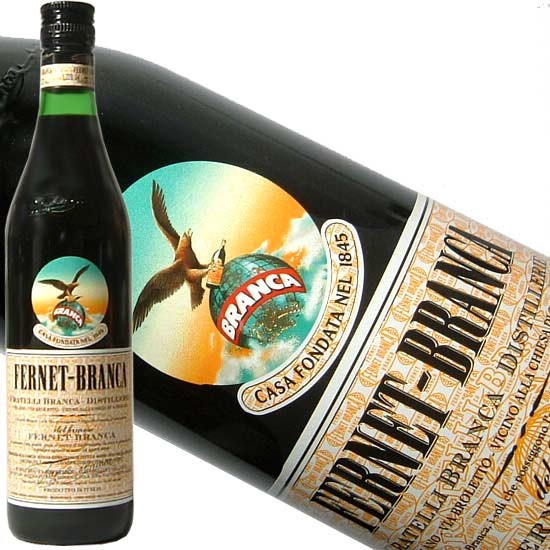
¼ oz. Fernet-Branca
Pour into a mixing glass with ice and stir until very cold or pour into a shaker filled with ice and shake forty times (a good biblical number). Strain into a cocktail glass.

old grand dadNamed after a theme dear to this pontificate, the Taste of Mercy offers an intriguing flavor profile as well as a historic précis. Bourbon is America’s greatest contribution to the spirits world, thanks in part to Catholic pioneers like Basil Hayden Sr., whose image still graces every bottle of Old Grand-Dad. And pomegranate is a Christian symbol of self-giving, as the fruit opens itself up to allow its seeds to scatter. (“Self-giving” as opposed to “navel-gazing” is also how Pope Francis has defined Christian life.) And we will assume that in accordance with the pope’s admonitions, the pomegranates were harvested by fairly treated migrant workers and without undue impact on the environment.

fernet brancaBut the showstopper is Fernet-Branca. This notoriously bitter beverage from Italy is immensely popular in Argentina, since half of all Argentines, including the pope, are of Italian descent. Its punch-in-the-face finish is appropriately evocative of Francis’ unminced words about airport bishops, weathervane Christians, and weapons manufacturers. (For a little fun, finish a round with your friends and then take turns reading aloud “The Pope Francis Little Book of Insults.”)

Pabstbier

Weideneder’s Pabstbier

Incidentally, this is not the first time that a papal event has inspired the creation of a special beverage. When John Paul II visited St. Louis, Missouri in 1999, Schlafly’s Tap Room brewed up a “Holy Smoke Papal Porter.” And within nineteen hours of Benedict’s election in 2005, Bavaria’s Weideneder Brewery had Pabstbier (“Papal Beer”) available in his hometown of Marktl. For Francis’ visit to America, six different breweries in the Philadelphia area have announced the production of their own special papal brews.

But since not everyone will have access to these regional tributes, it is appropriate to turn to the Taste of Mercy, which is easy to make and ideal for those who like a higher octane papal potation. Best of all, it adds new meaning to the phrase “the Francis effect.”

Taste of Mercy

The Taste of Mercy.

P.S.  For beer, wine, and cocktail suggestions in honor of the saints and for the feast days of the Church calendar, be sure to pick up a copy of Michael P. Foley’s Drinking With the Saints: The Sinner’s Guide to a Holy Happy Hour (see purchase buttons on our home page).