The great Saint Thomas More (1478-1535) was martyred for refusing to acknowledge King Henry VIII as head of the Church of England. More was beheaded on July 6, which prior to the 1950s was the Octave Day of the Feast of Saints Peter and Paul. More took consolation knowing that he was being martyred on a feast honoring St. Peter, to whose See he was remaining loyal at the cost of his life. In the traditional calendar prior to Vatican II, Thomas More’s own feast day was assigned to July 9, the first available day after his “heavenly birthday”–July 6 had the octave, July 7 Saints Cyril and Methodius, and July 8 Saint Elizabeth of Portugal. In the new, post Vatican-II calendar, St. Thomas More shares a feast day with Cardinal John Fisher on June 22, the date that Fisher was martyred for the faith.
Why bring all this up now? Because as far as I am concerned, the entire month of July is a good time to reflect on the life and legacy of Thomas More–and if you want a rather macabre reminder of this, consider the fact that since Thomas More was executed as a traitor, his head was placed on a spike on London Bridge for nearly a month until it needed to make way for other heads (his daughter Meg bribed an official and retrieved it when it was time to bring it down; otherwise More’s head would have been tossed into the Thames). We don’t know the exact date when this precious relic was thus preserved, but July 6 through July 31 is “nearly a month.”
And July is also a good time to drink beer. As it turns out, St. Thomas More enjoyed
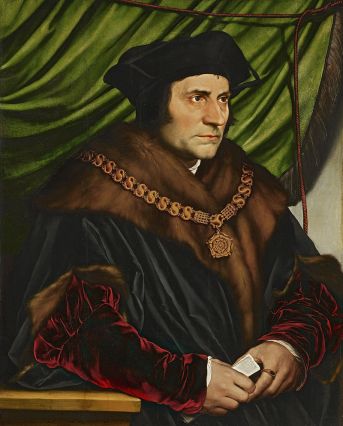
“No large beer, please.”
“small beer”–that is, beer with an alcohol content low enough to be suitable for “women, children, and manual laborers”! (there was just enough alcohol in the brew to kill water-borne pathogens without making you groggy). Today, the term “small beer” is also used for: 1) the second runnings from a very strong beer mash and, 2) beers that are thought to lack flavor. For small beer in the first sense, the easiest to find is probably Anchor Small Beer, produced by the Anchor Brewing Company in San Francisco from the second runnings of their Old Foghorn Barleywine. For small beer in the second sense, turn to the blandest light beer you’ve ever tasted and have at it.
I also recently learned that Thomas More’s great-grandfather was a brewer. John Joye,

Trinity Hall, the former Falcon on the Hoop Brewery, where Thomas More’s great-grandparents lived.
whose daughter Johanna married William More (Thomas’ grandfather), was one of London’s many beermakers. In 1460, he and his wife Joan rented a brewery called The Falcon on the Hoop on the west side of Aldersgate Street, where they also resided. The brew house eventually became Trinity Hall, which survived into the nineteenth century (see photo). We don’t know for certain what the building looked like in John Joye’s day, but in 1782 it was said to have a stained glass featuring “a monkey in a monk’s habit shaving a dog, which is seated in a chair.” Now that would make a great beer label.
It might be difficult where you are to track down an authentic beer made in London, although the city has its fair share of craft breweries (see here). Many brews are associated with London, such as 1) summer ales, 2) IPAs, and 3) Porters. IPAs and Porters are only a couple of hundred years old. “Summer ale” is also a recent label, although these lighter, golden ales hearken to a medieval tradition of local parishes making “Whitsun Ales” (after Whitsunday or Pentecost) for fundraising and social activities.
Toast
Thomas More’s last words were not, as it is often reported, “I die the King’s good servant but God’s first” but rather “I die the King’s good servant and God’s first.” The difference indicates that even in defying the wishes of Henry VIII, More was being his good servant, bearing witness to the truth and calling him back to God. Even in disobedience Thomas More saw no conflict between serving God and his earthly monarch. The better a servant of God he was, the better a servant to his fellow men. Period. It is a truth worth reflecting upon in our own day and age.
We can take More’s profound statement and turn it into a toast honoring him: “To St. Thomas More: The king’s good servant, and God’s first!”
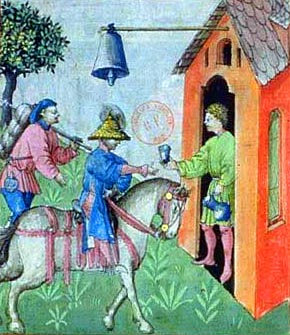
A medieval alehouse.

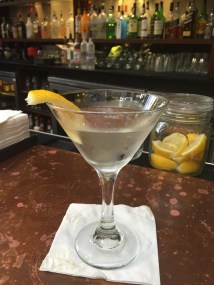 Martin had gone on to his eternal reward by then, Patrick was related to the great saint on his mother’s side. To honor this chapter of Patrick’s life, try the drink that we recommend on St. Martin’s Day, a Martlemas Martini: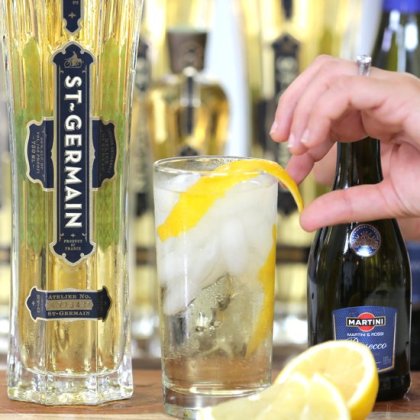



 (if you want my Catholic interpretation of the movie, click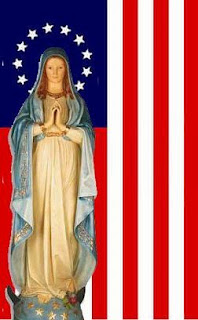


 ur Lady of the Immaculate Conception. If the Mother of God under the title of Our Lady of Guadalupe was able to convert the descendants of the Aztecs, surely under the title of Our Lady of the Immaculate Conception she can do the same for the descendants of the Puritans and the offspring of the “huddled masses” that comprise our great nation.

 Cassian of Imola (4th c.) was a schoolmaster near Ravenna, Italy who was sentenced to a deviously appropriate death. Cassian’s hands were tied behind his back and his two hundred students were instructed to stab him with their styli, the metal pens used by Roman boys to write on their wax tablets. Cassian is said to have urged them on as a sign of his willingness to suffer martyrdom; I like to imagine him criticizing their technique as a way of heightening their rage.
 St. Catherine (282-305) was a noble young woman from Alexandria who had consecrated her virginity to the Lord and who had a mystical vision in which she saw a ring being placed on her finger by Christ. Catherine upbraided the Roman Emperor Maximinus for his persecution of Christians, and the Emperor responded by assembling seventy pagan scholars to refute her. The learned Christian maiden, however, converted them to the Faith instead, which is why she is now the patron saint of philosophers and students.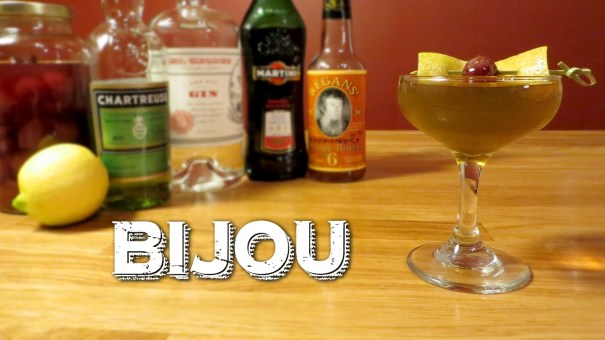
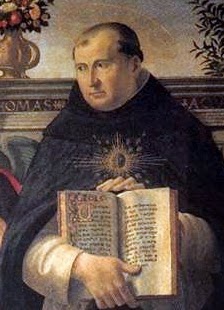 Cardinal Bessarion said it best: Thomas Aquinas (1225-1274) was “the most saintly of learned men and the most learned of saints.” An Italian nobleman who had to escape a tower (where his family had imprisoned him) in order to fulfill his vocation to the priesthood, Saint Thomas was a Dominican friar and a professor at the University of Paris. When he was canonized, Pope John XXII declared that he had wrought as many miracles as he had written articles in the Summa Theologiae, and it is a LOT. Thomas Aquinas is a Doctor of the Church, the patron saint of Catholic schools and Catholic students, and arguably the greatest theologian of all time.
 Drinking With The Saints